Thyroid Test: TSH, T3 and T4 Results Explained
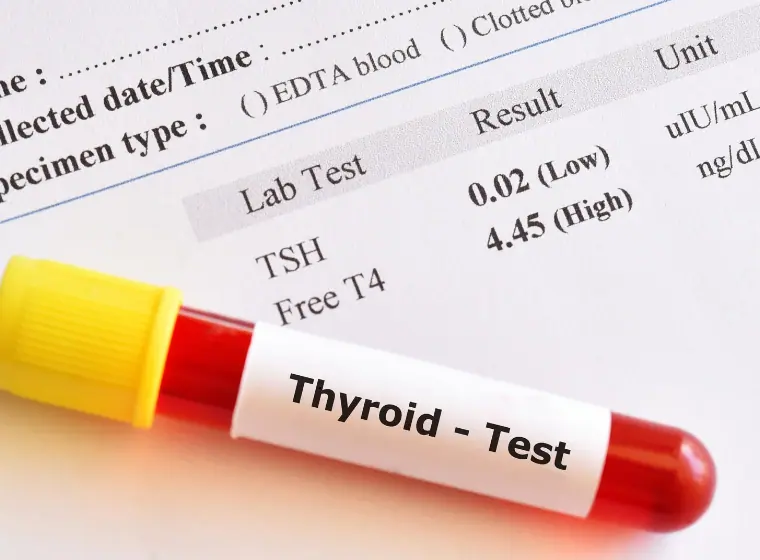
A thyroid test measures TSH, T3, and T4 levels to help determine whether your thyroid gland is functioning properly. High TSH levels often indicate an underactive thyroid (hypothyroidism), while low TSH combined with elevated T3 or T4 may suggest an overactive thyroid (hyperthyroidism). These hormones influence metabolism, energy levels, heart rate, and body temperature, making thyroid testing useful for investigating symptoms such as fatigue, weight changes, and palpitations. Understanding normal thyroid hormone ranges, abnormal test values, and when further testing is necessary can help you better understand your thyroid health.



Thyroid Test: TSH, T3 and T4 Results Explained helps you understand what your thyroid blood test says about your hormone levels and overall health. TSH shows how strongly your brain signals the thyroid gland, while T3 and T4 reflect the hormones that influence your metabolism, energy, and heart rate. High TSH often suggests an underactive thyroid, whereas low TSH with elevated T3 or T4 commonly points to an overactive thyroid. Understanding these measurements can help explain symptoms such as persistent fatigue, unexplained weight changes, or a racing heartbeat.
What Does a Thyroid Blood Test Measure?
Your thyroid is a small, butterfly-shaped gland at the front of your neck. Despite its size, it influences many everyday functions, including how your body uses energy, regulates temperature, and maintains a steady heartbeat.
A thyroid blood test checks whether this gland produces an appropriate amount of hormone.
Doctors usually focus on three measurements:
- TSH: A hormone from your pituitary gland that tells your thyroid how hard to work.
- T4: The main hormone your thyroid releases into your bloodstream.
- T3: A more active hormone that helps regulate metabolism and energy use.
You may also see FT3 and FT4 on your laboratory report. The letter F means “free” and refers to hormones that circulate without binding to transport proteins.
Not every thyroid assessment requires all three measurements. Doctors often begin with TSH and request additional tests when symptoms or initial findings suggest a problem.
TSH Levels Explained: What Is Normal, High or Low?
TSH stands for thyroid-stimulating hormone. Your pituitary gland produces it to regulate thyroid activity.
When thyroid hormone levels fall, your pituitary gland generally releases more TSH. When hormone levels rise, TSH usually decreases.
What Is a Normal TSH Level?
Many laboratories use an adult TSH reference range of approximately 0.4–4.0 mIU/L.
However, reference intervals vary between laboratories. Age, pregnancy, medications, and medical history can also influence how doctors interpret your measurement.
A value within the reference range usually suggests normal thyroid regulation, although it does not rule out every thyroid condition.
What Does High TSH Mean?
High TSH often indicates that your thyroid needs additional stimulation to produce enough hormone.
This pattern commonly appears in hypothyroidism, also known as an underactive thyroid.
Possible symptoms include:
- Persistent tiredness
- Unexplained weight gain
- Increased sensitivity to cold
- Dry skin or thinning hair
- Constipation
- Difficulty concentrating
- Changes in menstrual periods
Some people experience several symptoms, while others notice very little.
Doctors usually examine FT4 alongside TSH before determining whether thyroid hormone production has decreased.
What Does Low TSH Mean?
Low TSH frequently appears when your thyroid produces excessive hormone.
This can happen in hyperthyroidism, an overactive thyroid condition.
Common complaints include a rapid heartbeat, increased sweating, trembling hands, difficulty sleeping, and unexpected weight loss.
However, certain medications, pregnancy-related changes, and pituitary disorders can also influence TSH.
Patients interested in thyroid screening as part of a broader health assessment can explore the VIP Check-up in Turkey and review the package’s current laboratory tests.
What Do T3 and T4 Levels Tell You?
TSH reflects the signal your brain sends to the thyroid. T3 and T4 provide information about the hormones themselves.
Although these hormones work together, they have different roles.
What Does T4 Measure?
T4, or thyroxine, is the main hormone your thyroid produces.
Your body converts some T4 into T3 when it needs a more active form of thyroid hormone.
Doctors commonly measure free T4 (FT4) to assess thyroid function.
A typical FT4 reference range is approximately 0.8–1.8 ng/dL, although laboratories may use different limits.
Low FT4 with high TSH often indicates primary hypothyroidism. High FT4 with low TSH commonly suggests hyperthyroidism.
What Does T3 Measure?
T3, or triiodothyronine, helps control how quickly your cells use energy.
It also influences heart activity, body temperature, and metabolism.
Many laboratories use a free T3 reference range close to 2.3–4.2 pg/mL.
Doctors often request T3 testing when they suspect hyperthyroidism.
For example, someone may have low TSH and normal FT4 but elevated T3. This pattern can occur in T3 thyrotoxicosis, a form of hyperthyroidism.
T3 testing generally plays a smaller role in evaluating hypothyroidism.
How to Understand TSH, T3 and T4 Results Together
Seeing an abnormal value on your laboratory report can feel worrying. However, doctors rarely interpret one thyroid measurement in isolation.
The relationship between TSH and thyroid hormones often provides more useful information.
High TSH With Low FT4
This combination commonly indicates primary hypothyroidism.
Your thyroid produces insufficient hormone, so your pituitary gland increases TSH to stimulate it.
High TSH With Normal FT4
Doctors often call this subclinical hypothyroidism.
Your FT4 remains within the reference range, but your pituitary gland releases additional TSH.
Some people experience symptoms, while others feel completely well.
Low TSH With High FT4 or T3
This pattern commonly suggests hyperthyroidism.
Excess thyroid hormone causes your pituitary gland to reduce TSH production.
Low TSH With Normal FT4 and T3
This combination may indicate subclinical hyperthyroidism.
Your doctor considers your symptoms, age, heart health, and previous measurements before recommending further steps.
What If TSH Is Normal but T4 Is Abnormal?
Medication effects, laboratory interference, and certain pituitary conditions can create unusual hormone patterns.
Doctors may repeat the blood test or request additional investigations.
For patients seeking a wider health assessment, a comprehensive check-up in Turkey provides an opportunity to discuss appropriate laboratory tests. If your doctor suspects thyroid enlargement or nodules, a thyroid ultrasound may also help examine the gland.
When Should You Get Your Thyroid Tested?
Feeling tired occasionally does not necessarily mean your thyroid is underactive. Poor sleep, stress, and changes in daily routines can cause similar complaints.
However, persistent symptoms deserve attention, particularly when several appear together.
Consider discussing a thyroid test with your doctor if you experience:
- Unexplained weight changes
- Ongoing fatigue
- Frequent heart palpitations
- Unusual sensitivity to heat or cold
- Hair thinning or dry skin
- Irregular menstrual cycles
- Swelling around your neck
A family history of thyroid disease or certain autoimmune conditions may also increase your likelihood of developing thyroid problems.
If you are planning a general health assessment, a full body health check-up in Turkey can help you discuss which examinations match your medical history.
Do You Need to Fast Before a Thyroid Blood Test?
Most thyroid blood tests do not require fasting.
You can generally eat and drink normally before TSH, T3, or T4 testing unless your healthcare provider requests fasting for another examination.
However, a few factors can influence your measurements.
Thyroid medication: If you take thyroid hormone medication, ask your doctor whether to take your usual dose before the blood sample.
Biotin supplements: High-dose biotin, commonly found in hair and nail supplements, can interfere with certain thyroid laboratory tests.
Recent illness: Significant illness may temporarily change thyroid hormone levels.
Testing time: TSH naturally fluctuates throughout the day. Testing at similar times can help doctors compare measurements.
Do not stop prescribed medication without medical guidance.
Can You Have Thyroid Symptoms With Normal Test Results?
Yes. Some people experience symptoms commonly associated with thyroid disorders even when their hormone levels fall within laboratory reference ranges.
Fatigue, hair loss, and weight changes can have several explanations beyond thyroid dysfunction.
Iron deficiency, sleep disturbances, nutritional deficiencies, and other health conditions may cause similar complaints.
There is also a difference between thyroid function and thyroid structure.
A person can have normal thyroid hormone levels while still having a thyroid nodule or an enlarged gland.
Blood tests measure hormone activity, while ultrasound helps doctors examine the thyroid’s physical structure.
If your symptoms continue despite normal measurements, your doctor can investigate other possible causes.
What Happens After an Abnormal Thyroid Test?
An abnormal thyroid test does not always mean you need immediate treatment.
Your doctor first reviews your hormone levels, symptoms, medical history, and medications.
Depending on the findings, further assessment may include repeat blood tests, thyroid antibody measurements, or ultrasound imaging.
Thyroid antibodies can help doctors investigate autoimmune conditions such as Hashimoto’s thyroiditis and Graves’ disease.
Ultrasound becomes useful when doctors identify thyroid enlargement, nodules, or other structural concerns. Abnormal hormone levels alone do not always require imaging.
For international patients visiting Istanbul, Istanbul Med Assist helps coordinate medical appointments and health check-up services according to individual needs.
Understanding your measurements and discussing them with a qualified healthcare professional can help you make informed decisions about your thyroid health.
Frequently Asked Questions About Thyroid Tests
1. What TSH Level Indicates a Thyroid Problem?
Many laboratories use approximately 0.4–4.0 mIU/L as the adult TSH reference range. Values outside this interval may suggest thyroid dysfunction, but doctors also consider FT4, symptoms, medications, and medical history before making a diagnosis.
2. Is High TSH More Dangerous Than Low TSH?
Neither value is automatically more dangerous. High TSH often suggests reduced thyroid activity, while low TSH may indicate excessive hormone production. The health implications depend on the underlying condition, hormone levels, and individual risk factors.
3. Can TSH Be Abnormal While T3 and T4 Are Normal?
Yes. High TSH with normal FT4 often suggests subclinical hypothyroidism. Low TSH with normal thyroid hormone levels may indicate subclinical hyperthyroidism. Doctors sometimes recommend repeat testing to determine whether these changes persist.
4. Can Stress Affect Thyroid Test Results?
Severe physical stress and significant illness can influence thyroid hormone regulation. Everyday emotional stress does not necessarily cause abnormal thyroid measurements. Medications, supplements, and recent health changes may also affect test values.
5. How Often Should You Check Your Thyroid Levels?
Testing frequency depends on your symptoms, medical history, and previous measurements. People taking thyroid medication usually need periodic monitoring. Healthy adults without symptoms or risk factors do not necessarily require regular thyroid screening.
- True Stories ( 1 )
- Addiction ( 35 )
- Bariatric ( 7 )
- Cardiology ( 15 )
- Check-up ( 86 )
- Ear Nose & Throat ( 1 )
- Eye Care ( 4 )
- General Surgery ( 6 )
- Gynecology ( 7 )
- Hair Transplant ( 7 )
- Hematology ( 2 )
- IVF ( 23 )
- Longevity ( 27 )
- Neurosurgery ( 8 )
- Oncology ( 15 )
- Orthopedics ( 12 )
- Physiotherapy ( 1 )
- Plastic & Beauty ( 10 )
- Transplantation ( 4 )
- Urology ( 10 )