- Istanbul Med Assist
- Premium Prostate Check-up
- Multiparametric Prostate MRI
Multiparametric Prostate MRI in Turkey Price:$700
Medical imaging has advanced significantly, boosting accuracy and patient comfort. Multiparametric MRI (mpMRI) is one of today's most advanced imaging techniques. Unlike a typical MRI, this approach delivers a more comprehensive view of soft tissues, allowing clinicians to diagnose disorders more accurately. mpMRI is a vital instrument for modern-day medicine, whether it is used to detect brain disorders or prostate cancer. Multiparametric Prostate MRI in Turkey provides detailed imaging of the prostate and surrounding tissues to support the evaluation of suspicious findings. The scan can help specialists assess prostate abnormalities and determine whether further diagnostic steps may be necessary.

FAQs For Multiparametric Prostate MRI
You can find detailed information about the operation and organization you will have before coming to Turkey. You can contact your sales representative for any other questions you may have.
- An advanced MRI technique that provides detailed images for better diagnosis, especially for prostate cancer.
- It integrates several imaging techniques to get results that are more accurate and accurate.
- Prostate cancer, neurological disorders, liver, kidney, and musculoskeletal conditions.
- The scan typically lasts a few minutes to an hour, depending on the area being examined and whether contrast dye is used.
- The price depends on the clinic, scan complexity, and the experience of the radiologist.


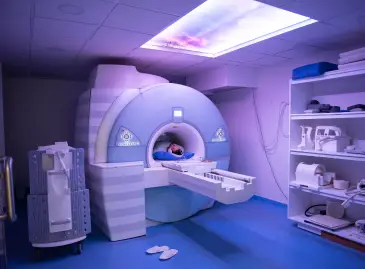



How Does Multiparametric MRI Work?
A more detailed image of the body's internal structure can be obtained by multiparametric MRI, which integrates many imaging techniques. It uses:
- T2-Weighted Imaging – Helps visualize soft tissues and detect abnormalities.
- Diffusion-Weighted Imaging (DWI) – Highlights how water moves in tissues, helpful in spotting cancerous growths.
- Dynamic Contrast-Enhanced Imaging (DCE) – Uses contrast dye to show blood flow patterns, aiding in detecting tumors.
Multiparametric MRI offers a comprehensive analysis by combining these factors, enabling doctors to evaluate tissues and suspicious areas in greater detail.
What Conditions Can Multiparametric MRI Detect?
This modern imaging method is especially useful for detecting several conditions, such as:
- Prostate Cancer: The most common use of mpMRI is to evaluate suspicious prostate lesions and provide detailed information about prostate tissue.
- Neurological Disorders: Helpful for analyzing strokes, multiple sclerosis, and brain anomalies.
- Liver and Kidney Diseases: Provides a clearer view of organ damage or masses.
- Musculoskeletal Issues: Helps diagnose ligament injuries, bone marrow abnormalities, and soft tissue damage.
Multiparametric MRI for Prostate Cancer
Multiparametric MRI's role in evaluating suspected prostate cancer is one of its most significant applications. Conventional PSA tests and biopsies provide important diagnostic information, while mpMRI can add detailed imaging of the prostate and suspicious lesions.
Physicians can use mpMRI and the PI-RADS scoring system to evaluate concerning lesions and determine whether further diagnostic investigation, including a biopsy, may be necessary. A Multiparametric MRI Prostate examination can also help provide more detailed information about the location and characteristics of suspicious areas within the prostate.
For international patients considering Multiparametric Prostate MRI in Turkey, the examination can form part of a broader prostate assessment that may also include PSA testing, specialist consultation, and additional diagnostic procedures when necessary.
Advantages of Multiparametric MRI Over Conventional Imaging
Compared to regular MRI or other imaging techniques, multiparametric MRI offers several benefits:
- Detailed Imaging: Combines multiple MRI sequences to provide detailed information about prostate tissue and suspicious lesions.
- More Targeted Evaluation: Helps physicians identify areas that may require further investigation.
- Non-Invasive & Radiation-Free: Uses magnetic fields rather than ionizing radiation.
- Better Soft Tissue Visualization: Particularly useful for evaluating the prostate and other soft tissues.
These characteristics make mpMRI particularly useful when conventional tests do not provide enough information for a detailed assessment.
Who Should Consider Multiparametric MRI?
Doctors may recommend multiparametric MRI for individuals who:
- Have an elevated PSA level but unclear or inconclusive previous findings.
- Have a family history of prostate cancer, which may increase their risk.
- Require further evaluation of suspicious prostate findings.
- Need advanced imaging for neurological, liver, or musculoskeletal conditions.
For patients researching mpMRI prostate in Turkey, a specialist consultation can help determine whether this imaging method is appropriate based on PSA results, medical history, symptoms, and previous examinations.
The Procedure: What to Expect During an mpMRI Scan
Getting an mpMRI scan is generally straightforward and non-invasive. Here’s what you can expect:
- Preparation: Depending on the investigated area and imaging protocol, you may receive specific preparation instructions before the scan.
- Scanning Process: You’ll lie inside the MRI machine while it takes a series of images. If contrast material is required, the medical team may administer it through an IV.
- Duration: The scan typically takes around 30 to 60 minutes, depending on the imaging protocol.
- Comfort: The examination is non-invasive, but patients affected by claustrophobia should discuss their concerns with the medical team before the scan.
Following preparation instructions and providing information about previous procedures, implanted medical devices, allergies, and relevant medical history can help the imaging team plan the examination appropriately.
Cost of Multiparametric MRI in Turkey
The hospital, imaging equipment, examination protocol, and additional medical services can all affect the price of multiparametric MRI in Turkey. The final cost may also vary depending on whether the patient requires contrast material, specialist consultation, laboratory testing, or additional diagnostic examinations.
For patients considering Multiparametric Prostate MRI in Turkey, Istanbul Med Assist can coordinate the imaging process together with relevant medical consultations and diagnostic assessments according to individual needs.
Why Choose Istanbul Med Assist for Multiparametric Prostate MRI in Turkey?
Istanbul Med Assist supports international patients who need advanced prostate imaging and diagnostic evaluation. The process can include medical history assessment, specialist consultation, MRI appointment planning, imaging, radiology reporting, and additional examinations when required.
Patients can benefit from:
- Coordinated appointment planning for international patients
- Access to advanced MRI imaging technology
- Radiology evaluation and medical reporting
- Specialist consultation when required
- Coordination of additional prostate examinations or laboratory tests
- Support with medical and travel arrangements
Rather than treating MRI as an isolated examination, Istanbul Med Assist can coordinate it as part of a broader diagnostic process based on the patient's medical history, PSA results, previous findings, and specialist recommendations.
Conclusion
Multiparametric MRI provides detailed imaging that can support the evaluation of prostate abnormalities and several other medical conditions. By combining different MRI sequences, the examination gives physicians additional information about tissue characteristics and suspicious areas without using ionizing radiation.
For prostate assessment, mpMRI findings can complement PSA results, medical history, specialist evaluation, and other diagnostic procedures. Patients considering the scan should discuss their individual risk factors and previous test results with a healthcare professional to determine the most appropriate diagnostic approach.