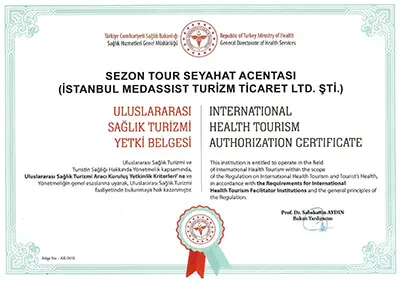
- Istanbul Med Assist
- Premium Gastroenterology
- Virtual Colonoscopy
Virtual Colonoscopy in Turkey
A virtual colonoscopy is a safe way for doctors to check your colon using a low-dose CT scan to create 3D images. It is pain-free and does not require sedation or anesthesia. Colon cancer can be detected without the need for a traditional colonoscope. Approved by major health authorities and supported by growing research, virtual colonoscopy is becoming a preferred choice for many individuals seeking a quicker and more comfortable way to assess their colon health. Virtual Colonoscopy in Turkey provides a non-invasive imaging option for evaluating the colon and identifying potential abnormalities such as polyps. The procedure can support colorectal screening for suitable patients who prefer an alternative to conventional colonoscopy.
FAQs for Virtual Colonoscopy
You can find detailed information about the operation and organization you will have before coming to Turkey. You can contact your sales representative for any other questions you may have.
- It involves inflating the colon with air or gas and using a CT scanner to capture detailed images of the bowel lining.
- No, it is pain-free and does not require sedation or anesthesia.
- Virtual colonoscopy has similar sensitivity to traditional colonoscopy in detecting large polyps and early-stage cancers.
- The entire procedure usually takes a few minutes.
- Turkey offers medical services at lower costs than many other countries. This makes it a more affordable option for international patients.



Why Screening Matters
Colorectal cancer is among the most prevalent cancers worldwide. However, screening can help detect changes in the colon, such as polyps or early tumors, before they progress further. Early detection can also provide more treatment options when colorectal cancer is identified.
Frequent screening is one of the most effective ways to identify abnormalities in the colon before they cause noticeable symptoms. Virtual colonoscopy offers a modern method for examining the colon without the sedation required for a conventional colonoscopy.
For international patients considering Virtual Colonoscopy in Turkey, CT colonography can provide a non-invasive option for colorectal screening when it is appropriate for the patient's individual risk profile.
How Does Virtual Colonoscopy Work?
A virtual colonoscopy, also known as CT colonography, utilizes a CT scanner to capture multiple cross-sectional images of the colon. These images are then reconstructed into a 3-D view, allowing doctors to examine the entire colon and rectum.
There is no need for anesthesia or sedation, and the imaging process typically takes a short amount of time. To introduce carbon dioxide or air into the colon, a small, flexible tube is inserted into the rectum. This helps expand the colon so the CT scanner can produce clearer images.
What Makes Virtual Colonoscopy So Appealing?
Virtual colonoscopy offers several potential benefits:
- Non-invasive compared with conventional colonoscopy
- Does not usually require sedation
- Provides 3-D images of the entire colon
- Uses CT imaging with a controlled radiation dose
- Requires a relatively short scanning time
- Allows patients to resume normal activities soon after the examination
- Can serve as a colorectal cancer screening method for appropriate patients
- Can identify larger polyps and suspicious abnormalities
- Can also visualize structures outside the colon, which may reveal additional findings
The suitability of virtual colonoscopy depends on individual health history, colorectal cancer risk, previous screening results, and the reason for undergoing the examination.
Who Should Get a Virtual Colonoscopy?
This screening test may be considered for:
- Adults eligible for routine colorectal cancer screening
- Individuals who cannot or prefer not to undergo conventional colonoscopy because of sedation concerns or certain health considerations
- Patients who previously had an incomplete conventional colonoscopy
Virtual colonoscopy may not be the preferred option for patients with certain conditions or findings, such as a history of polyps requiring removal, increased colorectal cancer risk, or inflammatory bowel disease. In these cases, conventional colonoscopy may provide an advantage because physicians can collect tissue samples or remove polyps during the same procedure.
The appropriate screening method and interval should depend on individual risk factors, previous findings, medical history, and a physician's recommendation.
How to Prepare for the Procedure
Just like with a standard colonoscopy, bowel preparation is required. A clean colon helps ensure that the imaging is clear and reduces the chance that abnormalities will be obscured by remaining stool.
Patients typically receive specific dietary and bowel preparation instructions before the examination. Some centers may also use tagging agents to help distinguish remaining stool or fluid from potential abnormalities on CT images.
Following the preparation instructions carefully is important for obtaining useful diagnostic images.
After the Test: What to Expect
Virtual colonoscopy does not usually require sedation, so patients can generally return to their normal activities soon after the examination.
A radiologist reviews the CT images and prepares a report based on the findings. The results can then be discussed with the patient and the relevant physician.
If the scan identifies suspicious polyps or other abnormalities, a conventional colonoscopy may be necessary to examine the area further, collect a biopsy, or remove a polyp.
How Effective Is Virtual Colonoscopy?
Virtual colonoscopy can detect colorectal abnormalities, particularly larger polyps and suspicious masses. Its effectiveness depends on factors such as bowel preparation, polyp size, imaging quality, and radiological interpretation.
One limitation is that virtual colonoscopy serves primarily as an imaging examination. If physicians identify a polyp or suspicious lesion that requires tissue sampling or removal, the patient will generally need a conventional colonoscopy afterward.
For this reason, the choice between virtual and conventional colonoscopy should reflect individual screening needs and medical history rather than convenience alone.
Costs and Availability in Turkey
Virtual colonoscopy is available at medical facilities with appropriate CT imaging technology in Turkey, particularly in major cities such as Istanbul.
The cost can vary depending on the medical facility, CT imaging protocol, radiology evaluation, specialist consultation, and any additional diagnostic services required. International patients may also require appointment coordination, translation, transfers, or follow-up consultations.
Why Choose Istanbul Med Assist for Virtual Colonoscopy in Turkey?
For international patients considering Virtual Colonoscopy in Turkey, Istanbul Med Assist helps coordinate the different stages of colorectal screening and diagnostic imaging.
The process can include:
- Review of previous medical reports
- Appointment coordination
- Bowel preparation instructions
- CT colonography planning
- Radiology evaluation and reporting
- Gastroenterology consultation when required
- Coordination of conventional colonoscopy if further investigation is necessary
- Translation, transfers, and medical travel support
The appropriate screening pathway depends on the patient's age, symptoms, family history, previous colorectal screening results, and individual risk factors.
Final Thoughts
Virtual colonoscopy provides a non-invasive method for examining the colon using CT imaging and reconstructed 3-D images. It can serve as a colorectal screening option for appropriately selected patients who need an alternative to conventional colonoscopy.
However, the examination does not allow physicians to remove polyps or collect tissue samples during the same procedure. If suspicious findings appear on the scan, conventional colonoscopy may still be necessary. Patients should therefore discuss their individual colorectal cancer risk, medical history, and screening options with a healthcare professional before choosing the most appropriate examination.